

What is rubber accelerator MBTS?
MBTS is a moderate-speed vulcanization accelerator that balances curing speed and product quality.
MBTS (2,2'-Dithiobisbenzothiazole) is a commonly used vulcanization accelerator, primarily used in the vulcanization process of natural rubber, synthetic rubber, and other rubber products.
MBTS is a moderate vulcanization speed accelerator, providing a balanced effect in rubber vulcanization. It not only increases the curing speed but also improves the physical properties of the finished product. It is often used in combination with other accelerators, such as MBT, ZDEC, and ZDBC, to optimize vulcanization performance and enhance product quality.
The advantages of MBTS include:
- Good thermal stability: Suitable for higher vulcanization temperatures.
- Slower vulcanization speed: Provides a longer processing time, allowing more control over the vulcanization process.
- Low volatility: Ideal for products where low volatility is required.
Due to its balanced vulcanization speed, MBTS is commonly used in the production of various rubber products such as tires, hoses, seals, and shoe soles.
Qualified Parameters of MBTS
| Parameter | Value |
|---|---|
| Chemical Name | 2,2'-Dithiobisbenzothiazole (MBTS) |
| Appearance | Pale yellow powder |
| Melting Point | 220-225°C |
| Purity | ≥ 98% |
| Ash Content | ≤ 0.5% |
| Volatility | ≤ 0.5% |
| Solubility | Soluble in chloroform, slightly soluble in ethanol |
| Specific Gravity | 1.45 g/cm³ |
| Boiling Point | Not applicable |
What is the chemical structure of MBTS?
MBTS, or 2,2'-Dithiobisbenzothiazole, has the chemical formula C14H8N2S4. The structure consists of two benzothiazole rings connected by a sulfur-sulfur bond. This unique structure contributes to its effectiveness as a vulcanization accelerator in the rubber industry.

What is the production process of MBTS?
MBTS is typically produced through a multi-step process starting with the precursor accelerator MBT (Mercaptobenzothiazole). The production involves using raw materials such as aniline, carbon disulfide, and sulfur, which react under controlled temperature and pressure conditions. Various oxidation methods, such as sodium nitrite, hydrogen peroxide, and oxygen oxidation, can be used to produce MBTS. Among these, the oxygen oxidation method is more environmentally friendly, although it requires higher investment in equipment.
What are the different accelerators for rubber?
There are several types of rubber accelerators used in the vulcanization process, each with its specific application. Common types include:
- Primary accelerators: These include MBT, MBTS, and ZDEC, which accelerate the vulcanization process and improve the speed and efficiency of curing.
- Secondary accelerators: These are used in combination with primary accelerators to enhance the vulcanization characteristics, such as ZDBC, TMTD, and DTDM.
- Delayed-action accelerators: Such as DPG, which are used to control the timing of the vulcanization process, offering better processing safety.

What is the use of chemical MBTS in rubber?
MBTS is used primarily as a vulcanization accelerator in the production of rubber goods. Its main role is to speed up the curing process of rubber, allowing for faster production cycles and improved product properties. MBTS is commonly used in the manufacture of tires, rubber hoses, gaskets, seals, and shoe soles, where a moderate curing speed is required to balance processing time and final product performance.

What is the difference between MBT and MBTS?
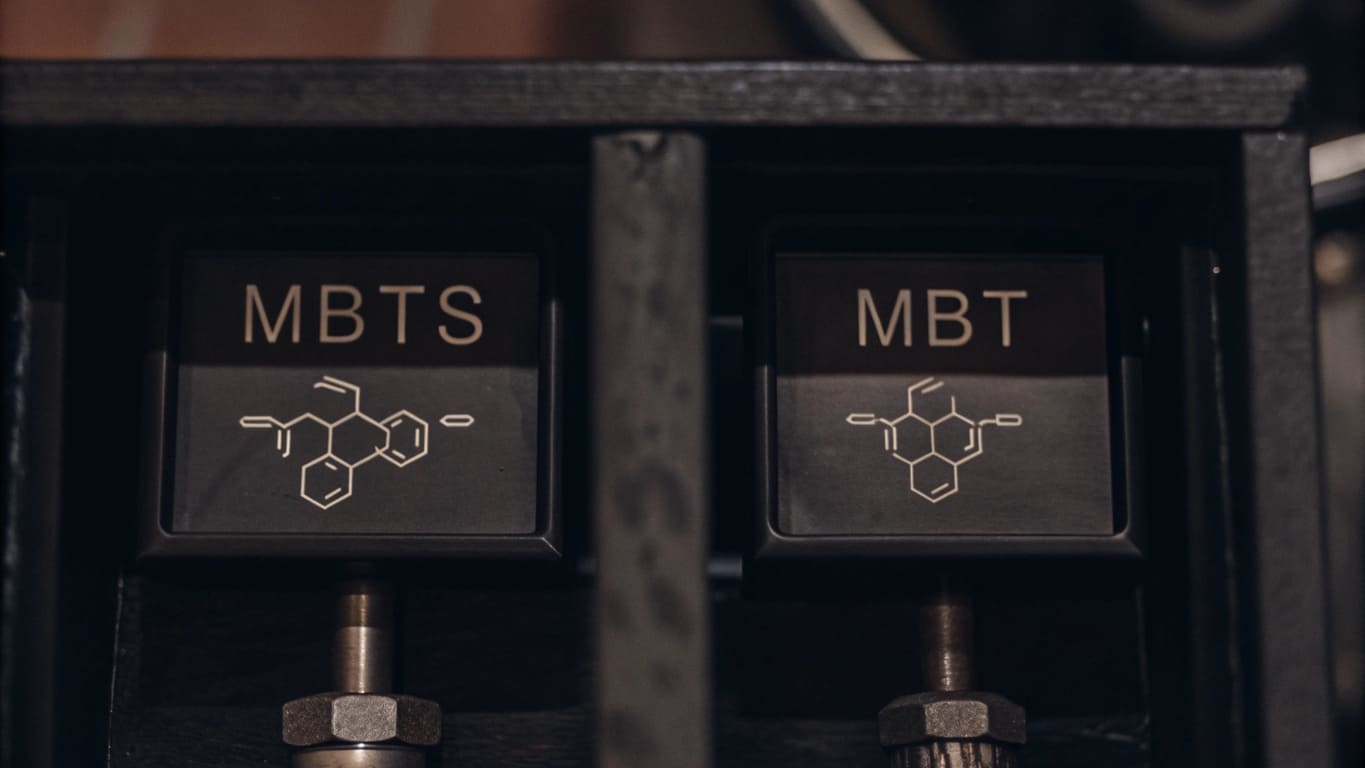
While MBT (Mercaptobenzothiazole) and MBTS (2,2'-Dithiobisbenzothiazole) are both rubber accelerators derived from benzothiazole, their properties differ significantly:
- Vulcanization Speed: MBTS has a moderate vulcanization speed, while MBT acts faster, making MBTS ideal for applications requiring longer processing times.
- Application Range: MBTS is used in a wider range of rubber products, especially in cases where controlled curing is needed.
- Effectiveness: MBTS offers better stability and a lower volatility rate compared to MBT, making it preferable for certain specialized rubber products.
What is the function of MBTS in rubber compounding?
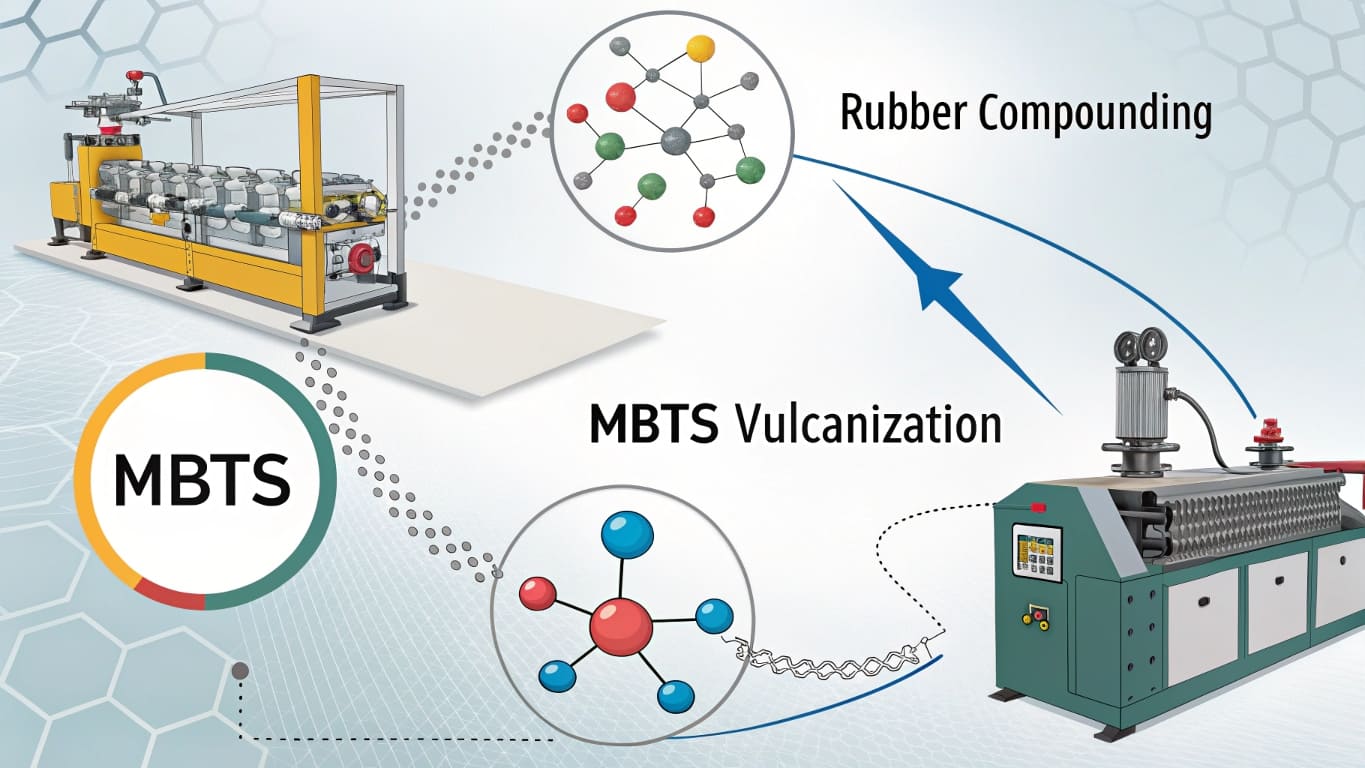
In rubber compounding, MBTS serves as an accelerator, significantly enhancing the vulcanization speed and improving the curing process. It helps to reduce the overall curing time while ensuring that the rubber products meet the required physical and mechanical properties. MBTS is especially useful when combined with other accelerators to improve the overall curing efficiency and product performance.
Conclusion
MBTS is an essential moderate-speed accelerator used to improve rubber curing efficiency, balancing vulcanization speed and product quality.
Frequently Asked Questions
What is the recommended dosage for this product?
The general dosage range is 0.5-2.0 phr depending on the application. For specific formulations, consult with your supplier or technical team.
What is the shelf life?
24 months when stored in sealed original packaging under cool, dry conditions (below 30°C).
Is this product REACH compliant?
Contact your supplier for current REACH registration status and compliance documentation.
Can this product be used in combination with other additives?
Yes, it is compatible with standard rubber compounding ingredients including sulfur, zinc oxide, stearic acid, carbon black, and other accelerators and antioxidants.
What packaging options are available?
Standard packaging is 20 kg or 25 kg bags. Drum, FIBC big bag, and custom packaging options are available upon request.
Can I get a free sample for testing?
Free samples are available for qualified buyers. Contact the supplier for sample requests and shipping arrangements.
MBTS Applications by Industry
| Application | Typical Loading (phr) | Function |
|---|---|---|
| Tire manufacturing | 0.5-1.5 | Secondary accelerator |
| Conveyor belts | 0.5-1.2 | Cost-effective cure |
| Shoe soles | 0.8-1.5 | Good processing safety |
| Industrial hoses | 0.5-1.0 | Balanced cure properties |
| General rubber goods | 0.5-1.5 | Versatile accelerator |
MBTS vs Other Thiazole Accelerators
| Accelerator | Cure Speed | Scorch Safety | Application |
|---|---|---|---|
| MBT | Fast | Low | General purpose |
| MBTS | Semi-ultra | Medium | Tire, industrial |
| ZMBT | Ultra-fast | Good | Latex only |
| CBS | Fast | Excellent | Tire manufacturing |

